
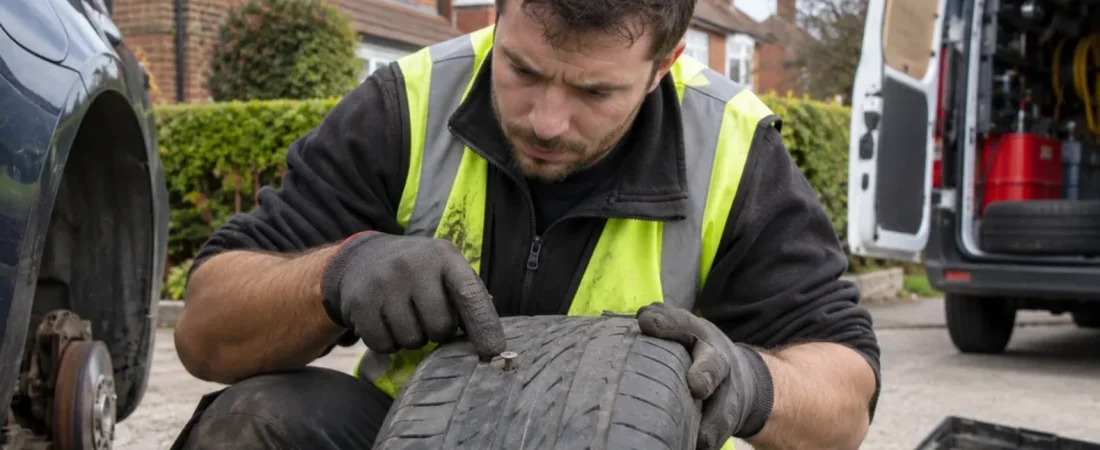
These London tyre repair FAQs answer the questions drivers ask us most: can my puncture be repaired, when do I need a new tyre, and what should I do if I get a flat in the city? The short version is that a small hole in the middle of the tread can often be repaired, while damage to the sidewall or a tyre driven on flat means a replacement.
Quick answer: A puncture can usually be repaired if it is in the central three-quarters of the tread and the tyre has not been driven on while flat. Sidewall damage, bulges, large cuts and tread below the legal 1.6mm limit all mean a new tyre. If you need a replacement, you can order tyres from Mobiletyres4u online and book a fitting slot at your home or workplace.
Key Takeaways
-
Where the hole is matters most. Repairs are only made in the central part of the tread, never in the sidewall.
-
Do not drive on a flat tyre. Even a short distance can ruin a tyre that could have been repaired.
-
The legal minimum tread depth for cars is 1.6mm across the central three-quarters of the tread, all the way round.
-
Bulges, cracks and deep cuts cannot be repaired. The tyre needs replacing.
-
New tyres can come to you. We supply tyres online and fit them at a booked slot at your home or workplace.
London Tyre Repair FAQs: Can My Puncture Be Repaired?
Which punctures can be repaired?
Tyre repairers in the UK work to a British Standard, BS AU 159. It only allows repairs in the central three-quarters of the tread, which the trade calls the minor repair area. A nail or screw in that area, in a tyre that is otherwise healthy, is the classic repairable puncture.
Which punctures cannot be repaired?
A hole in the sidewall or the shoulder of the tyre cannot be repaired, because that part flexes and carries the load. The same goes for a tyre with a bulge, exposed cords, a large cut, or one that has been driven on while flat. A repairer will also turn down a tyre where a new repair would overlap an old one.
How is a proper puncture repair done?
The tyre comes off the wheel so the inside can be checked, because damage from running soft often only shows on the inner wall. If the tyre passes, the hole is filled and sealed from the inside, and the wheel is refitted and balanced. A sealant can from the boot is a get-you-home measure, not a permanent repair.
What about run-flat tyres?
Run-flat tyres are built to be driven on for a short distance after losing pressure, so it is hard to tell how much damage has been done inside. Many tyre makers advise replacing them after a puncture. Tell us if your car has run-flats when you order, so the right replacement is supplied. Our tyre fitting services page explains how ordering and fitting work.
When Do I Need a New Tyre Instead?
What is the legal tread depth in the UK?
The Highway Code says cars, light vans and light trailers must have a tread depth of at least 1.6mm across the central three-quarters of the tread and around the whole tyre. Driving on a tyre below that limit can bring a fine of up to £2,500 for each tyre, plus penalty points. Most tyres have small wear bars in the grooves: when the tread is level with them, it is time to replace the tyre.
What other signs mean a tyre needs replacing?
Look for cracks in the rubber, cuts deep enough to show the cords, a lump on the sidewall, or wear on one edge only. A tyre that keeps losing pressure also needs checking before it lets you down. Our guide to common tyre problems in London covers the causes we see most often.
Why do London tyres suffer so much?
City driving is hard on tyres. Potholes, kerbs, speed humps and debris from roadworks all cause punctures and sidewall knocks, and tight parking means tyres rub kerbs more often than they would elsewhere. A quick look round your tyres once a week catches most problems early.
How can I make my tyres last longer?
Keep them at the pressure in your car’s handbook, checked when the tyres are cold. Take speed humps and potholes slowly, and avoid bumping up kerbs. There is more in our guide on how to maintain your tyres in London.
What Should I Do if I Get a Flat Tyre in London?
What are the first steps?
Slow down gently and stop somewhere safe and legal, away from traffic, such as a side street or a car park. Put your hazard lights on. Do not carry on driving on the flat, as the wheel and tyre can both be damaged very quickly.
Should I change the wheel myself?
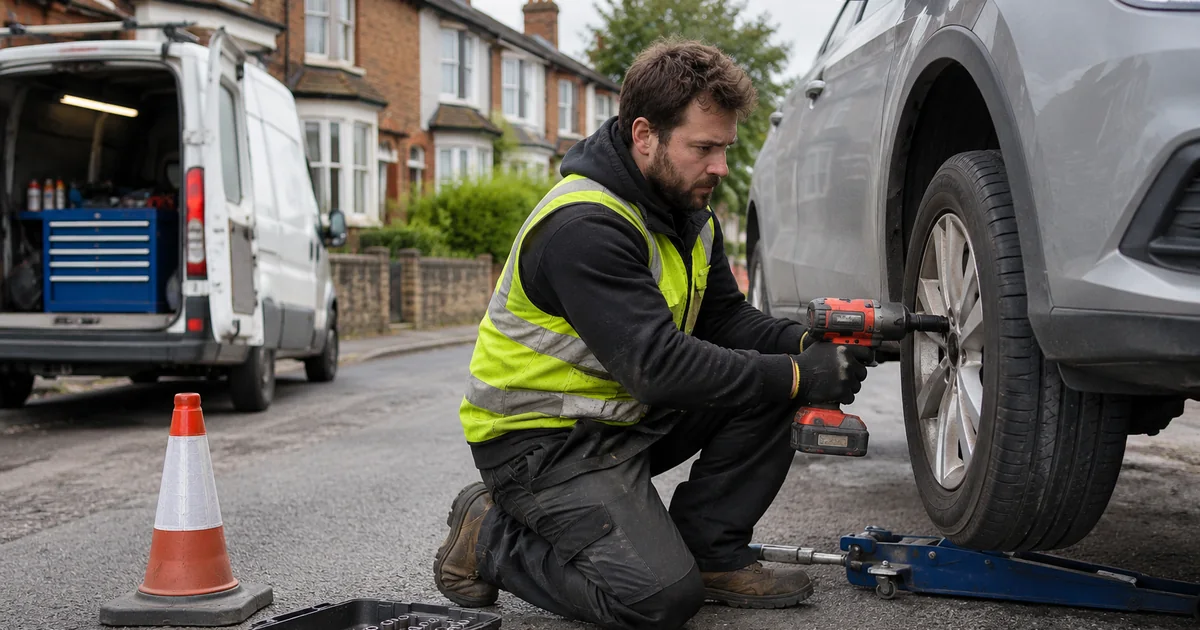
Only if you are on flat, firm ground well away from moving traffic, and you have a spare and the tools. Never try to change a wheel on a motorway hard shoulder or at the side of a fast road. If you are in any doubt, call your breakdown provider.
When is mobile tyre fitting the right answer?
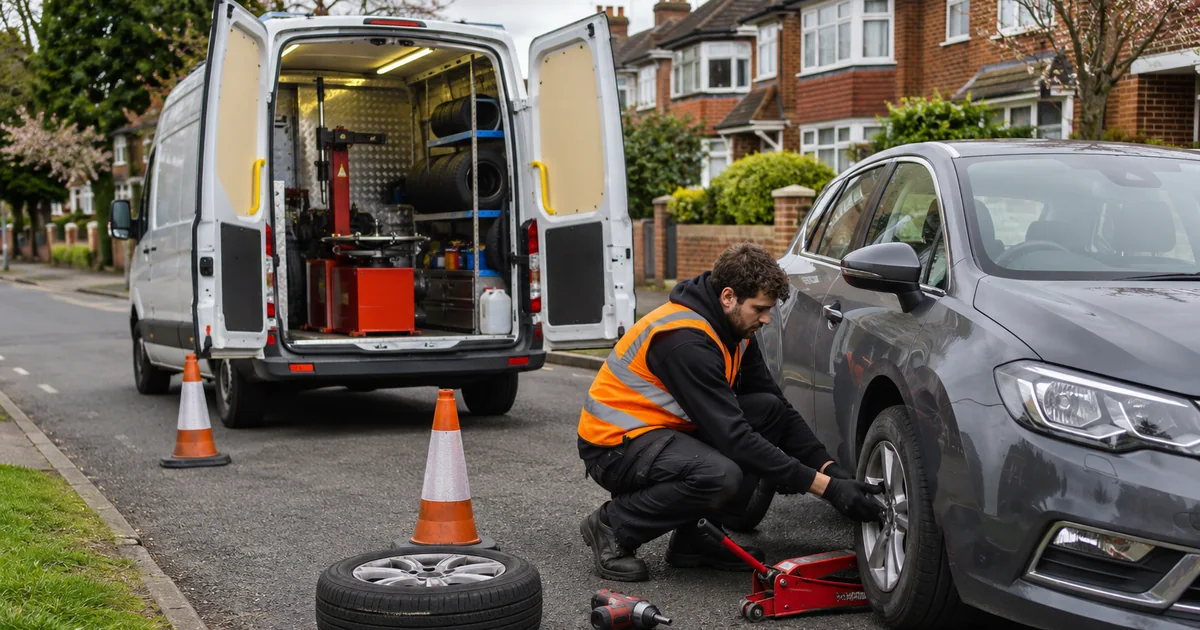
Mobile fitting suits a car that is parked safely at home or at work and needs new tyres. You order the right tyres, book a slot, and the fitter comes to you, which saves driving on a damaged or worn tyre. Our article on mobile tyre services for flat tyres goes through it step by step.
What should I have ready for the fitter?
Have your locking wheel nut key to hand, which is often in the glovebox or with the spare wheel. Park on a flat, firm surface with room to work around the car. If you are choosing a fitter for the first time, our guide on how to find mobile tyre services lists the checks worth making.
Frequently Asked Questions
Can a slow puncture be repaired?
Often, yes. If the hole is small and sits in the central part of the tread, and the tyre has not been driven on while flat, a repairer can usually fix it. Have it looked at early, because driving on a soft tyre damages the sidewall and turns a repair into a replacement.
Is it legal to drive on a tyre with a nail in it?
A nail does not make a tyre illegal by itself, but a tyre that is losing air or has a damaged structure is not safe to drive on. Check the pressure, keep your speed down and get it inspected as soon as you can. Leave the nail in place until then, as pulling it out can let the air out faster.
How long does a mobile tyre fitting take?
It depends on how many tyres are being changed and how easy the wheels are to get to. Having your locking wheel nut key ready and the car parked on flat, firm ground keeps the visit short.
Which tyre brands do you supply?
We list Pirelli, Michelin, Bridgestone and Goodyear tyres on our website. Search by your registration so the tyres you see are the right size for your car.
How do I book new tyres with Mobiletyres4u?
Choose your tyres on our website and book a fitting slot in the same order. If you would like help choosing, call us on 07904005565 or send a WhatsApp message from the site.
If your tyre is past repairing, you do not need to drive on it to get it sorted. Order your tyres online and book a fitting slot, or call us on 07904005565 and we will help you find the right tyres for your car.
For the full rules on tyre condition, see the Highway Code guidance on vehicle maintenance on GOV.UK.